Energy
—29 juli 2026
July 29, 2026
4 minutes
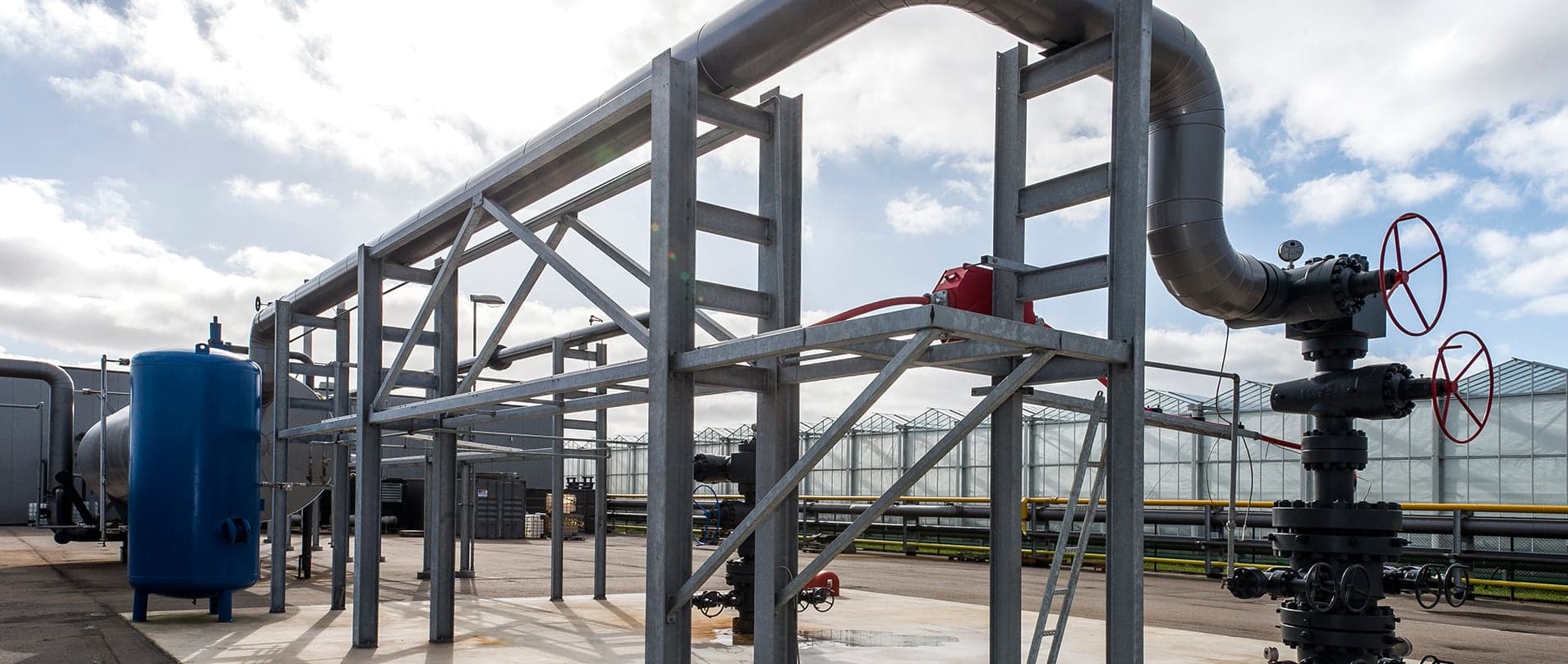
High development costs and uncertainty in the early development phase form a persistent funding bottleneck for geothermal projects. Invest-NL, EBN, and Geothermie Nederland have therefore asked Fakton Energy to investigate which financial instruments can help reduce this bottleneck. The joint research describes four instruments that make risks more manageable, allowing private financiers to get involved earlier.
Developers of geothermal projects must make large investments at an early stage, while it is only after drilling that the actual heat output of a source becomes clear. Financiers usually only step in once the source has been successfully demonstrated, permits have been granted, and there is sufficient certainty about the heat market. As a result, developers carry the full project risk for a long period. Their own equity also remains tied up in a limited number of projects for a long time, reducing their capacity to start new projects.
A better financial feasibility is needed, precisely because geothermal energy is important for a sustainable and resilient energy system. As a local, sustainable heat source, geothermal can contribute to reduced dependence on fossil energy imports and international energy and raw material markets. Moreover, geothermal provides continuous heat, regardless of sun, wind, or weather conditions. This makes geothermal heat an important component of the future sustainable energy mix.
The joint analysis shows that high development costs, uncertainty in the early project phase, and limited financing options delay the scaling up of geothermal energy in the Netherlands. Discussions with developers, financiers, public institutions, and international experts reveal four dominant bottlenecks:
The risk-return ratio in the development phase is out of balance. Developers need to invest significant capital, while private financiers often can only step in later. Targeted financial instruments can help bridge this gap.
An important starting point of the analysis is that public funds are most effective when they specifically reduce risks and mobilise private capital. Public funds can be efficiently used to remove financing bottlenecks and advance promising projects. Successful examples in France and Germany show that geothermal energy can grow strongly when financial instruments are combined.
Invest-NL, EBN, and Geothermie Nederland point to an integrated package of financial instruments and policy measures to permanently resolve the financing bottleneck. The basis for this is a revised RNES scheme based on French or German models, complemented by measures for the development, drilling, and realisation phases. Think of:
Furthermore, scaling geothermal energy requires better subsurface data, stronger collaboration within the heat chain, and more predictable permitting procedures.
The report shows how public and private parties can collaboratively overcome a common financing bottleneck. By making development risks more manageable, private financiers can participate earlier, and promising projects can progress more quickly.
This provides perspective for the further development of geothermal energy and for other innovative energy projects that contribute to a competitive, sustainable, and less import-dependent energy system.
Khalid Sheikh
sr. business development manager