Biobased & Circular economy
—26 november 2026
November 26, 2026
3 minutes
How do we keep the energy transition on track if supplies of critical raw materials dry up? New research by EqoLibrium, commissioned by Invest-NL, shows that targeted emergency stockpiles can help. Investments in European supply chains are also needed to build long-term resilience.
How do we keep the energy transition on track when supplies of critical raw materials are disrupted? New research by EqoLibrium, commissioned by Invest-NL, shows that targeted emergency stockpiles can help. Building long-term resilience also requires investment in European supply chains.
The Netherlands and Europe are heavily dependent on international supply chains for the energy transition. In particular, China’s dominant position in raw material processing and component manufacturing leaves Europe vulnerable to geopolitical disruption.
Reliable access to raw materials is essential for innovative companies to invest and scale up. Invest-NL is therefore exploring how we can make investment in strategic supply chains financially viable, together with governments, businesses and investors.
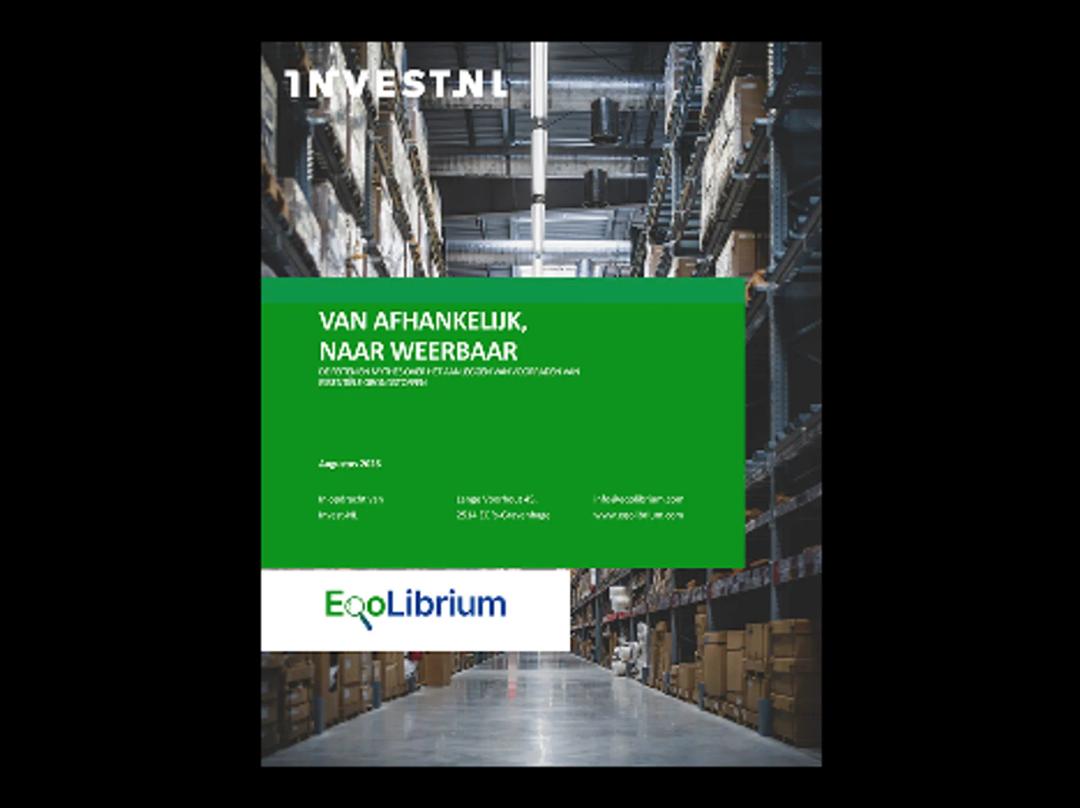
The report From Dependence to Resilience shows that storing raw materials on a broad scale is not very effective. Targeted stockpiles of semi-finished products (such as permanent magnets for wind turbines, electric motors and industrial machinery), copper, aluminium and components that can be used immediately (such as cables and transformer parts) offer greater potential. They help maintain energy supplies during temporary disruptions.
A scenario analysis illustrates the importance of this. In the event of a three-month disruption, targeted stockpiles of copper and aluminium could limit the use of natural gas. In the scenario studied, additional CO₂ emissions fall from 2.5 to 1.7 million tonnes.
The report recommends starting with a pilot for copper and aluminium, and working with grid operators and energy companies to determine which materials and components are essential.
Emergency stockpiles buy time, but do not eliminate dependencies. This requires investment in recycling, European production and processing, and diversifying suppliers. It is also important to align climate policy and strategic autonomy more closely.
Cooperation between government and businesses is essential. Sharing financial risks can make investment in both emergency stockpiles and European supply chains more viable. The EU is now pursuing a broad package of measures to promote the sustainable extraction, processing and recovery of critical raw materials in the EU. A pilot in the Port of Rotterdam to build up stocks of critical raw materials is part of this.
The findings in this report will help these parties take action. In this way, we are working towards a sustainable, competitive and resilient European economy.
Xandra Weinbeck
sr. business development manager