Biobased & Circular economy
—24 maart 2026
March 24, 2026
3 minutes
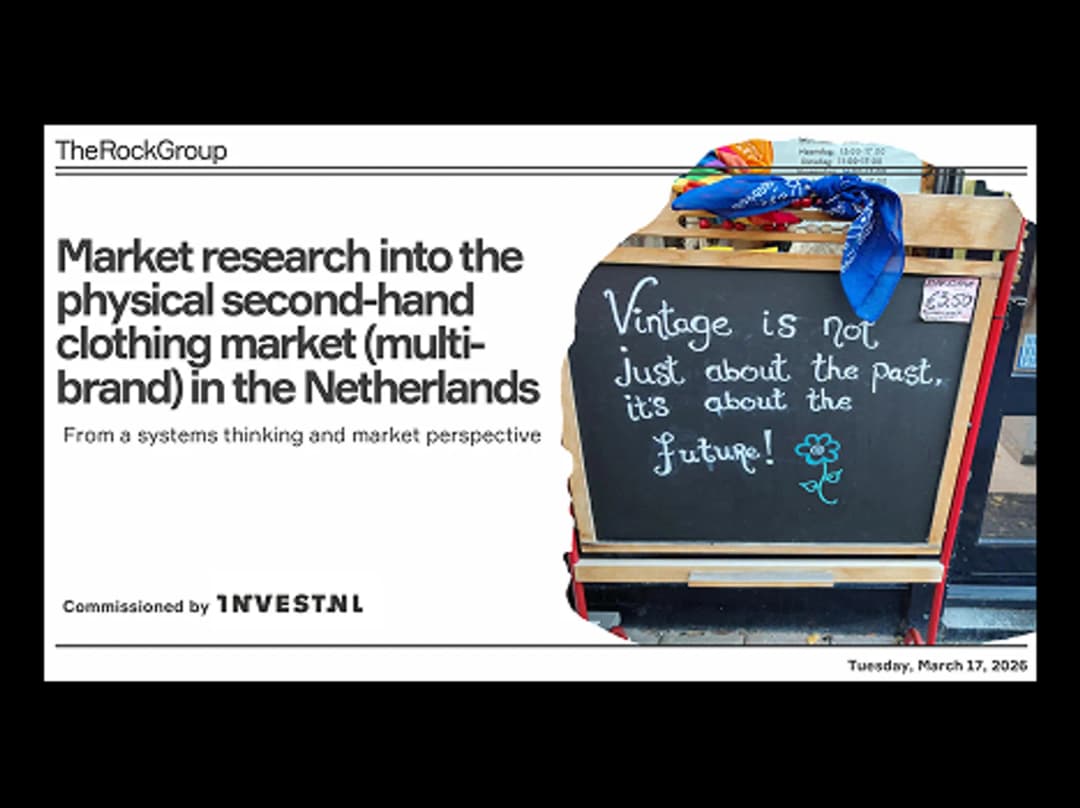
From secured vintage shop to rapidly growing second-hand chain: the Dutch second-hand clothing sector has seen significant growth in recent years. Reuse of clothing aligns well with the ambitions for a circular economy. New research by Invest-NL and TheRockGroup demonstrates how the sector plays an important, yet still underappreciated, role in the circular textile chain.
The sector comprises approximately 590 stores in the Netherlands and provides employment for around 1,000 FTEs. It makes a tangible contribution to 5 of the 9 circular goals from Dutch circular textile policy, such as extending the lifespan of clothing, reducing waste, and lowering raw material use. At the same time, this contribution remains underrepresented in policy, regional development, and financing.
The report Market research into the physical second-hand clothing market (multi-brand) in the Netherlands maps the market from a system and market perspective for the first time. The outcome is clear: there are opportunities to better position the sector as a driver of a circular textile chain towards 2050.
For example, second-hand clothing can be more strongly recognized as part of the solution by including it in the circular textile policy. Additionally, opportunities exist in professionalizing entrepreneurs and strengthening the chain for sorting and reuse. Achieving a better competitive position relative to fast fashion is crucial in this regard.
At the same time, the research highlights the challenges the market faces. Rising retail costs, competition from online platforms, and the rise of fast fashion put pressure on the market. Furthermore, physical second-hand retail receives little targeted attention in regional development, policy, and financing, despite evidence of its contribution to circular objectives.
“The second-hand clothing market shows that circular solutions already work. By creating the right conditions, this sector can grow into an important engine of the circular textile chain,” says Lucas Lemmens, Business Development Manager at Invest-NL.
In the coming period, Invest-NL will engage with policymakers and supply chain partners to strengthen the role of second-hand retail on the agenda. Additionally, Invest-NL is focusing on other critical links in the textile chain, such as sorting and recycling, to identify financing bottlenecks and investment opportunities. In this way, Invest-NL is working towards a textile chain where reuse becomes the norm and circular solutions can grow on a larger scale.
Lucas Lemmens
business developer