Deep tech
—18 september 2026
September 18, 2026
4 minutes
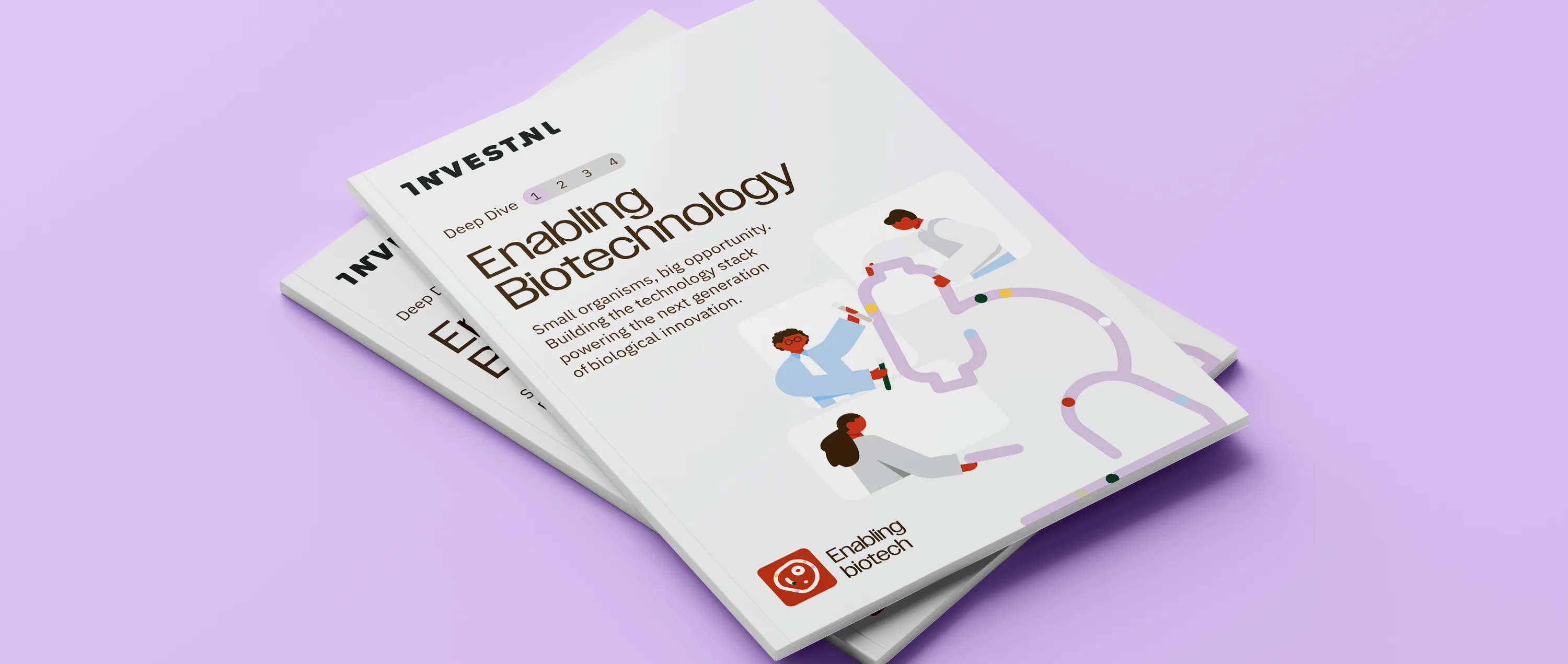
The Netherlands has strong biotech expertise and an internationally leading high-tech sector, but is not yet making sufficient use of the combination. A new analysis by Invest-NL focuses on the technological foundations of biotech and shows that technologies for measuring, analysing, automating and scaling up will be decisive for biotech’s next phase. By forging stronger links between the high-tech sector and biotech, the Netherlands can build a distinctive position in the international biotech economy.
Biotechnology uses living organisms, cells or biological processes to develop new products, materials and applications. This makes biotech a key technology for the Netherlands, with opportunities in areas including healthcare, food production and a more sustainable industry.
Biotech innovation often starts in the lab, but only progresses when a discovery can be applied reliably and efficiently on an industrial scale. This requires more than biological knowledge alone. It involves data, measurement and analysis technology, automation, process development and production capacity.
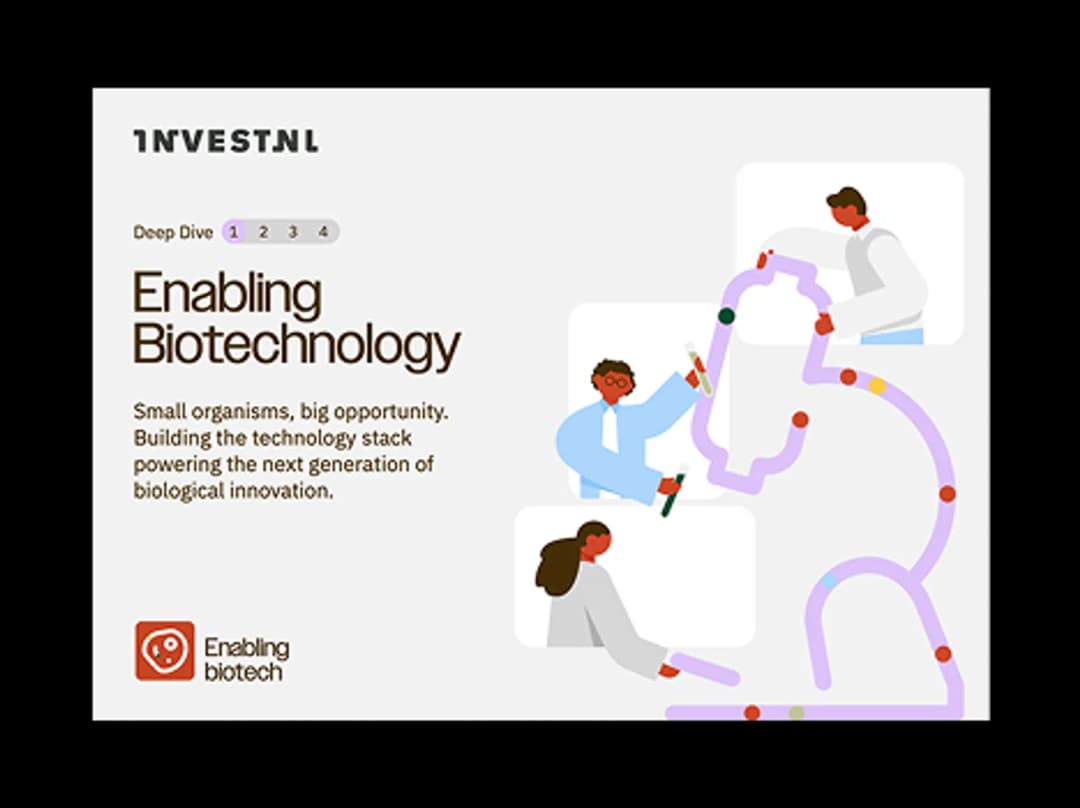
Invest-NL’s ‘Enabling Biotech’ deep dive is the first in a series of deep dives into the Dutch biotech sector. The analysis shows that opportunities for the Netherlands lie mainly in this underlying technological layer. Advanced measuring equipment and sensing help us to better understand, predict and improve biological processes. This aligns well with the Netherlands’ existing strengths: precision technology, photonics, semiconductor equipment and systems integration.
Modern biotech is becoming increasingly specialised. Start-ups are often strong in one part of the value chain. They need partners for other expertise, facilities and scaling up. This collaboration is often fragmented. As a result, development takes longer and scaling up is more difficult.
The comparison with the Dutch semiconductor industry shows where the opportunity lies. The success of that sector is not down to a single company, but to a strongly connected ecosystem of specialised companies, knowledge institutions, suppliers and infrastructure. The challenge for biotech is therefore primarily organisational: how can we bring all the components together in one well-functioning system?
Invest-NL’s analysis points in a clear direction: structurally connect biotech with the Dutch high-tech industry. Develop shared infrastructure for experimentation, measurement, process development and scaling up. And organise the ecosystem so that companies can learn, collaborate and grow to industrial scale more quickly.
The Invest-NL biotech series consists of four deep dives. This first part comes from the Deep Tech Fund and looks at the technological foundation underpinning biotech: the knowledge, equipment, infrastructure and collaboration needed to bring applications to industrial scale more quickly. This foundation acts as the engine behind all application areas, a pattern that the Deep Tech Fund also sees in other deep-tech fields. The next deep dives will focus on the application areas of agrifood, life sciences & health, and industrial and circular biotech.
Through the biotech series, Invest-NL maps investment opportunities, barriers to scaling up and possible solutions. This enables entrepreneurs, investors, knowledge institutions and the government to work from a shared understanding towards a competitive Dutch biotech sector.
Elise Lie
investment analyst